
25 Oct Open Wired: why I started a podcast about pragmatic inclusion
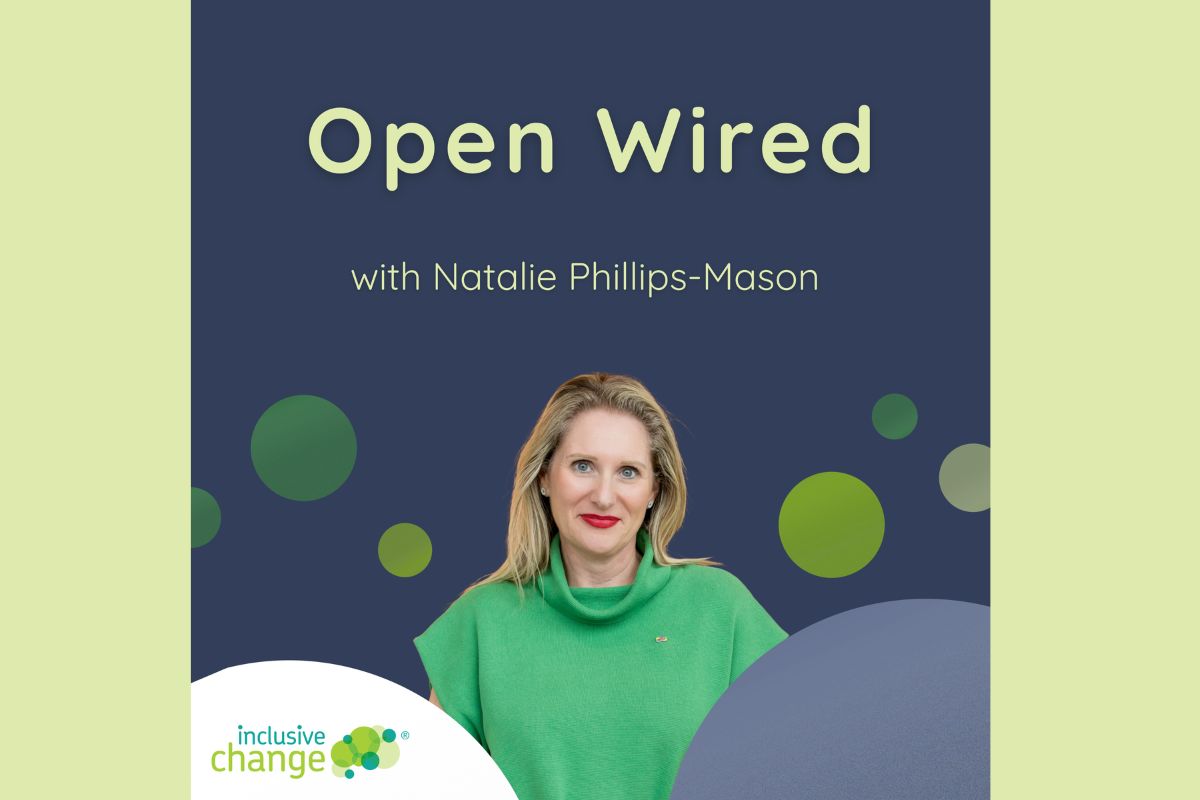
Open Wired: why I started a podcast about pragmatic inclusion
Open Wired is a podcast hosted by Natalie Phillips-Mason, founder of Melbourne consultancy Inclusive Change. Each episode is a candid conversation with someone solving an inclusion challenge, from disability advocates and neurodivergent executives to retailers, researchers and founders. Topics include neuroinclusive workplace design, sensory friendly retail, inclusive hiring and inclusive governance. Open Wired streams on Spotify, Apple Podcasts and YouTube.
Listen on Spotify · Listen on Apple Podcasts · Watch on YouTube
What are people saying about Open Wired?
In October 2026, Inside FMCG featured Open Wired in its Worth consuming list, a page of “ideas, voices and rabbit holes worth following”. The recommendation came from Professor Gary Mortimer of Queensland University of Technology, a guest on the show, who described it as a podcast that “emphasises practical solutions rather than theory”. Thank you, Gary and thank you to Octomedia for the feature.
Listeners rate it too:
- Apple Podcasts: ★★★★★ 5.0 out of 5 (12 ratings)
- Spotify: ★★★★★ 5.0 out of 5 (5 ratings)
Ratings as at 25 October 2026.
If an episode has been useful to you, a rating on Apple Podcasts or Spotify helps other people find it.
Why did I start Open Wired?
For thirty years my job has been implementing behaviour change inside organisations. I soon noticed that the way we work is based on a societal norm that excludes a large part of the workforce. Difference is misunderstood, misconstrued and stigmatised. Yet so many of us are impacted by difference.
The most useful things I’ve learned about inclusion came from conversations. A podcast keeps those conversations live and reaches people who might never hear them anywhere else.
For years I had Open Wired on a vision board, always hesitating to launch it. After listening back to a recorded interview with a neurodivergent Board member who thanked me for being curious, I decided to press Go.
Why does Open Wired feature such a wide range of guests?
Each person’s experience is unique to them. It’s impossible to capture inclusion through one conversation, or one story. What’s more, real data adds weight to anecdotes. What threads Open Wired conversations together is experiences from different people shining on a light on human differences – each in their own way. A disability advocate, a neurodivergent professional, a former retail CEO and a workplace design researcher see the same problem from different perspectives. Media representation shapes the customer brand proposition. Board structures create barriers or invite perspectives in. Office design decides who gets to concentrate, and who has to mask.
I also want listeners to hear from people who rarely get grouped together. Paul Zahra ran David Jones and led the Australian Retailers Association. Lisa Cox OAM and Paul Nunnari PSM PLY have spent years pushing for honest disability representation in the media. Storm Menzies has developed accessible makeup options for people who deserve to feel good.
A range of guests also means a range of opinions. Not everyone agrees with me, or my guests, and the episodes are better for it.
What have I learned from hosting Open Wired?
- There is no substitute for curiosity. Most guests describe being asked too late, or not at all. One question can lead to a shifted mindset.
- Small steps, big impact. Most inclusion steps cost nothing and create huge impact. Curiosity is free. So is sending out an agenda the day before, offering people a choice of where to sit or to turn their cameras off on virtual meetings.
- Research and lived experience say the same thing. The data on the built environment supports the sensory friction that guests describe. Gary Mortimer’s exploration of customer aggression in retail provides insights into protecting vulnerable employees in the Retail sector.
- Leadership needs vulnerability. Guests such as Paul Zahra explain why staying closeted was not an option for him. It takes courage for Sara Harrup to propose changes to rigid governance structures, or for Joh Barker to be open about how she creates empathy through touch.
- Everyone can be an ally. Everyday people create extraordinary impact. You don’t have to be a corporate leader or an award winner to make a difference. Open Wired guests include small business owners, parents and solopreneurs who saw an inclusion opportunity and made it their mission to address it.
Which Open Wired episodes should I start with?
I suggest starting with episode 1, Disability representation in the media, with Lisa Cox OAM and Paul Nunnari PSM PLY. Two award-winning advocates who share their different experiences and the power of authentic disability representation. Listen to Lisa and Paul’s episode.
Who has been on Open Wired?
- Bianca Stern, Head of Impact and founding member of All Things Equal, a Melbourne social enterprise offering award-wage hospitality jobs, training and career pathways for people with disability. Named in the Forbes 30 Under 30 Asia list for 2025, Bianca explains the All Things Equal Blueprint for Disability Employment and why hospitality is the right sector for it. Episode: A Blueprint for Disability Employment.
- Parul Singh, talent acquisition specialist and later-in-life diagnosed AuDHD woman of colour, on how power and privilege create systemic barriers. Episode: Unpacking intersectionality, power and privilege
- Kay Sargent, Director of Thought Leadership, Interiors at HOK and author of Designing Neuroinclusive Workplaces. Episode: Neuroinclusive Workplace Design
- Paul Zahra, former CEO of David Jones, on leading through transformation and building inclusive boards. Episode: The Capitalist with a Social Heart
- Tristan Lavender, autistic speaker and neuroinclusion consultant, on building employee resource groups that work. Episode: Employee-led Inclusion
- Rochelle Courtenay, founder of Share the Dignity, on the campaign to end period poverty in Australia. Episode: Ending Period Poverty
- Joh Barker, an experienced board member specialising in finance, governance and technology, who has held senior corporate roles responsible for strategy, operations and the bottom line. Diagnosed autistic in her 50s, well into her corporate career, Joh talks plainly about how she leads and grows talent. Episode: Fostering Diamonds in the Workplace
- Karen McCarthy, keynote speaker on resilience and adaptability and a not-for-profit board member working to advance the rights of people facing discrimination and disadvantage. Karen lost her sight in her mid-30s and talks about acquired disability and finding a different way to do what she loves. Episode: The Book Lover who went Blind
- Sandee Facy, on the Hidden Disabilities Sunflower and how organisations can use it for staff and customers. Episode: The Hidden Disability Sunflower
- Ryan Kelly, founder of Creative Natives, on recruiting with empathy and the case for flexible roles. Episode: Putting the Human back into the Hiring game
- Sara Harrup, founder of Unique Mind Co and Deputy Chair of the Australian Charities and Not-for-profits Commission, on neuroinclusive governance. Episode: How Neurodivergent Directors can influence traditional Boards
- Sarah James, founder of The Sensory Specialist, on designing sensory-friendly public spaces with councils, schools and venues. Episode: The Sensory Specialist
- Madeleine Jaine Lobsey, founder of Wondiverse and the WonderPlay Studio, on neuroinclusive co-working in Sydney. Episode: Neuroinclusive Co-working
- Professor Gary Mortimer, Queensland University of Technology, on customer aggression and psychosocial safety in retail. Episode: Customer Aggression in Retail & Psychosocial Safety.
- Storm Menzies, founder of ByStorm Beauty, on designing accessible beauty products and getting them onto shelves. Episode: Inclusive Beauty
- Lisa Cox OAM and Paul Nunnari PSM PLY, disability advocates, on representation in the media. Episode: Disability Representation in the Media.
Who is Open Wired for?
Anyone interested in making pragmatic inclusion happen in workplaces, boardrooms, retail and physical spaces. That includes people leaders, store teams, board directors, founders, and anyone who has sat through inclusion training and wants more. People of all neurotypes, people with disability, allies, family members, friends and colleagues. The conversations are honest, practical and sometimes confronting.
Frequently asked questions
What is the Open Wired podcast about?
Open Wired features candid conversations with people solving inclusion challenges. Topics include neuroinclusive workplace design, inclusive hiring, sensory friendly retail, disability representation, employee-led change, disability employment and inclusive governance.
Who hosts Open Wired?
Natalie Phillips-Mason, founder of Melbourne consultancy Inclusive Change and a 2026 Inside Small Business Top 50 Small Business Leader. She has three decades of change management experience.
Who has been a guest on Open Wired?
Guests include former David Jones CEO Paul Zahra; Kay Sargent of HOK, author of Designing Neuroinclusive Workplaces; disability advocates Lisa Cox OAM and Paul Nunnari PSM PLY; governance leader Sara Harrup; retail researcher Professor Gary Mortimer; Rochelle Courtenay of Share the Dignity; Bianca Stern, Head of Impact at All Things Equal and a Forbes 30 Under 30 Asia honouree; board member Joh Barker; keynote speaker and not-for-profit director Karen McCarthy; neuroinclusion consultant Tristan Lavender; Parul Singh; Sandee Facy; Ryan Kelly of Creative Natives; Sarah James of The Sensory Specialist; Madeleine Lobsey of WonderPlay Studio; and Storm Menzies of ByStorm Beauty.
Where can I listen to Open Wired?
On Spotify, Apple Podcasts and YouTube.
How is Open Wired rated?
Open Wired is rated 5.0 out of 5 on Apple Podcasts and Spotify (as at October 2026). It was featured in Inside FMCG’s Worth consuming list in October 2026, recommended by Professor Gary Mortimer of Queensland University of Technology.
Can I sponsor an episode or a season?
Yes, we welcome sponsorship so we can continue to spotlight inclusion change makers. Email natalie@inc-change.com for sponsorship enquiries.
About your host
Natalie Phillips-Mason is the founder of Inclusive Change, a Melbourne consultancy specialising in sensory-friendly and neuroinclusive workplaces and retail. She brings three decades of change management experience and a habit of asking the question everyone else in the room is avoiding. She treats inclusion as something people practise every day, long after the policy is signed. More about Natalie.
Bring this work to your organisation. Get in touch.